
Daily Habits
The Architecture of a Considered Morning
Tobias Ashcroft
·
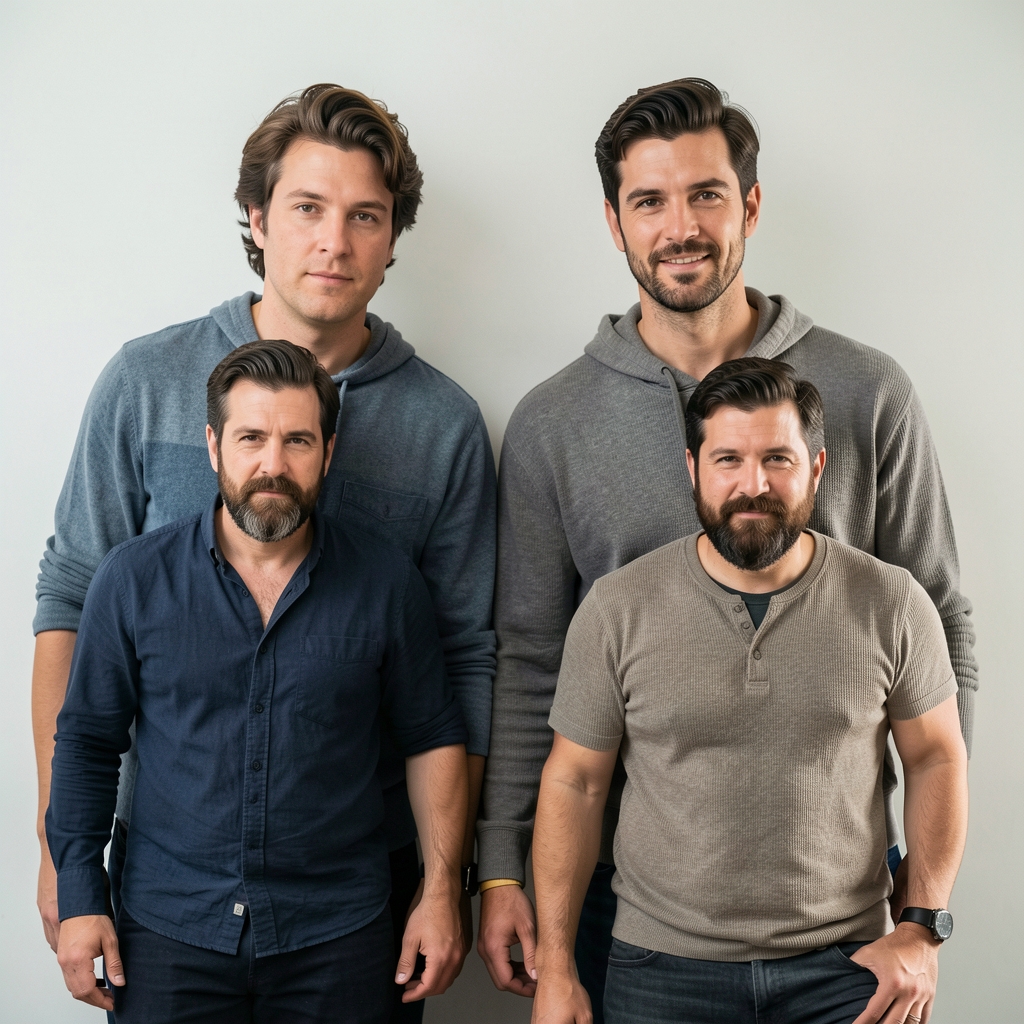
A considered grooming routine communicates more than appearance. It reflects attention to detail, a regard for daily self-maintenance, and the unhurried quality of a man at ease with his own upkeep. It is, in the quietest possible sense, an act of self-respect made visible.
There is a long tradition of dismissing personal grooming as a superficial concern — the province of vanity, or of those with too much time. This view has the logic of the opposite exactly wrong. A man who attends to his appearance with care is not spending time on the inessential. He is performing a daily discipline that, like most disciplines, yields its returns quietly and over time.
The grooming choices a man makes are, in the most literal sense, the first thing other people observe. Before a word is spoken, before any professional or social exchange has begun, appearance has already communicated something. The question is not whether this communication occurs — it always does — but whether it is intentional or accidental. The man who has given thought to his grooming is sending a deliberate signal. The man who has not is sending a different signal, and usually an unintended one.
None of this is an argument for elaborate preparation or expensive products. The most effective grooming routines are simple ones. They require a small number of quality items, a consistent daily practice, and a willingness to pay modest attention to the face, hair, and skin that one presents to the world. The argument for grooming is not aesthetic perfectionism — it is the same argument that applies to any daily discipline: the consistent, considered practice compounds.
"The most effective grooming routines are simple ones — a small number of quality items, a consistent daily practice, and modest attention."
— Alistair Whitfield, Atero Almanac, April 2026
Men's skincare has undergone a significant shift in the past decade. Where a previous generation might have regarded moisturiser as an item belonging exclusively to women, the current understanding — among men who have simply tried it — is more pragmatic: the skin is the largest organ, it is exposed to sun, wind, humidity, and varying temperatures every day, and it responds predictably well to consistent basic care.
In a climate like Kuala Lumpur's — year-round high humidity, strong UV index, and frequent transitions between air-conditioned interiors and outdoor heat — the skin faces a particular set of demands. A daily cleanse to remove accumulated sweat, environmental particulate, and sebum is the most basic and most effective intervention. A lightweight moisturiser with broad-spectrum sun protection, applied each morning, addresses the UV exposure that is the primary driver of premature skin ageing in tropical climates. These two steps — cleanse, protect — form the essential daily framework. Everything else is supplementary.
The product choices within this framework are less important than their consistent application. A product that is used every day is more effective than a better product used irregularly. The man who cleanses and moisturises each morning with a basic, well-formulated product will have noticeably better skin at forty-five than the man who alternates between elaborate regimens and long periods of inattention.

A man who has found a haircut that works well for his face shape and hair type, and who maintains it at regular intervals, has solved one of the most visible dimensions of personal presentation with a minimum of ongoing effort. This is the goal: not the most fashionable cut, or the most elaborate styling, but the right cut, well maintained, that requires little daily intervention beyond basic upkeep.
The consultation with a skilled barber or hairdresser — one who understands the interaction of hair texture, face shape, and the amount of daily effort the individual is actually willing to invest — is one of the better personal care investments available. The information gained from a single considered session with a skilled professional is worth considerably more than the cost of the appointment. A cut that works for the hair type, with a style that can be maintained in two minutes each morning, is worth discovering once and returning to reliably.
Beard care follows the same logic: intentional and consistent is better than occasional and elaborate. A man who wears a beard that is well defined, moisturised, and shaped to suit his face communicates the same quality of attention as the man who wears clean, well-fitting clothes. The details are specific; the underlying signal is the same.
Grooming is a daily discipline, not a special occasion activity. Its returns are visible precisely because they compound over time through consistent, modest effort.
In a tropical climate, a daily cleanse and broad-spectrum sun protection cover the most important skincare bases. Consistency with simple products outperforms irregular use of complex ones.
The right haircut for the individual — discovered once, maintained reliably — removes daily effort from one of the most visible dimensions of personal presentation.
A small, edited wardrobe of well-fitting, seasonally appropriate pieces requires less daily decision-making and produces more consistently good results than a large, disorganised one.
The relationship between grooming and wardrobe is close enough that the two are often discussed together in the context of men's personal presentation. The parallel is appropriate: both are daily practices that communicate a man's regard for his own appearance. Both benefit from simplicity, quality, and consistency. Both are undermined by excessive complexity and infrequent attention.
A well-considered wardrobe is not a large one. It is an edited one. The distinction is important. A man who owns many clothes but rarely feels well dressed has a quantity problem masquerading as a quality problem. The solution is not more clothes but fewer, better, and more deliberately chosen. A core of well-fitting basics — trousers that sit correctly at the waist and break cleanly at the shoe, shirts in neutral tones that fit the shoulder properly, footwear that is maintained and appropriate — provides the foundation from which everything else extends.
Seasonal variation is worth attending to. In Kuala Lumpur's tropical context, the distinction is less between warm and cool seasons and more between different levels of humidity, rainfall, and occasion. The man who has thought about what the different contexts of his week require — working days, weekend outdoor activity, social occasions in air-conditioned environments — and has equipped himself accordingly, will find that getting dressed each morning is a simpler and more satisfying process than it is for the man who faces the same wardrobe without this framework.
The care of clothes is as important as their selection. Garments that are laundered at appropriate temperatures, stored properly, and repaired rather than discarded when minor damage occurs will last considerably longer and look considerably better than the same garments handled carelessly. This is not fastidiousness for its own sake. It is the same economy of attention that applies to the whole of a considered life: small, regular maintenance prevents larger problems and preserves the quality of things worth preserving.
The concept of the modern gentleman is not about formality, expense, or adherence to a historical standard of dress and behaviour. It is about a quality of attention — the sense that the man before you has thought about how he presents himself, not obsessively or anxiously, but as part of a general regard for the details of his own life.
This quality of attention manifests in small ways. The shoes are maintained. The handshake is firm and the eye contact is held. The shirt fits. The haircut is recent. The breath is considered. The nails are clean. None of these individual elements is remarkable in isolation — their cumulative effect is a presentation that communicates self-respect without effort or announcement.
Grooming, at this level, is not vanity. It is fluency in the quiet language by which men communicate their regard for themselves and, by extension, for those they encounter. The man who has learned this language — who has made it habitual rather than effortful — has freed himself from the daily low-grade anxiety of not quite looking as he would like to. He has replaced it with something more useful: the quiet confidence of a man who knows he presents well, and whose attention can therefore rest on more interesting things.

Alistair Whitfield contributes to Atero Almanac on the subjects of personal presentation, wardrobe, and the broader culture of considered living. His background spans editorial work in men's publications across Southeast Asia.
More from the Almanac